Components of a Transformer and Their Functions

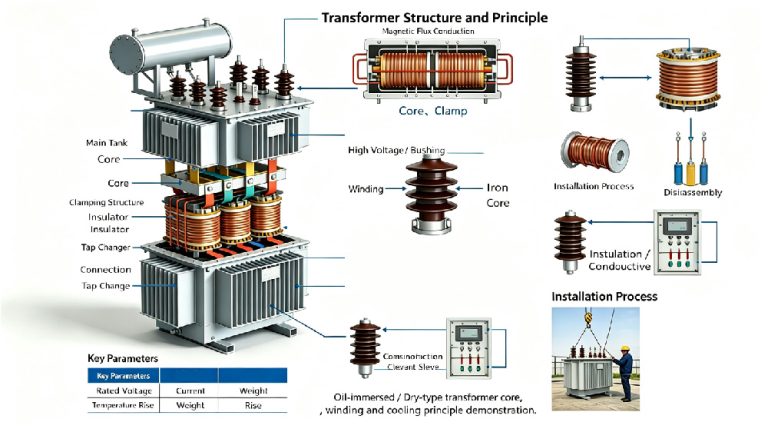
Components of a Transformer and Their Functions

Transformers are truly the “energy conversion hubs” of power systems. The power grid relies on them for both step-up and step-down voltage conversion and the safe transmission of electrical energy; their stable operation directly determines the reliability of the power supply. To better illustrate the abstract electromagnetic principles behind transformers, the following set of 3D…
How Does A Transformer Cool Down?

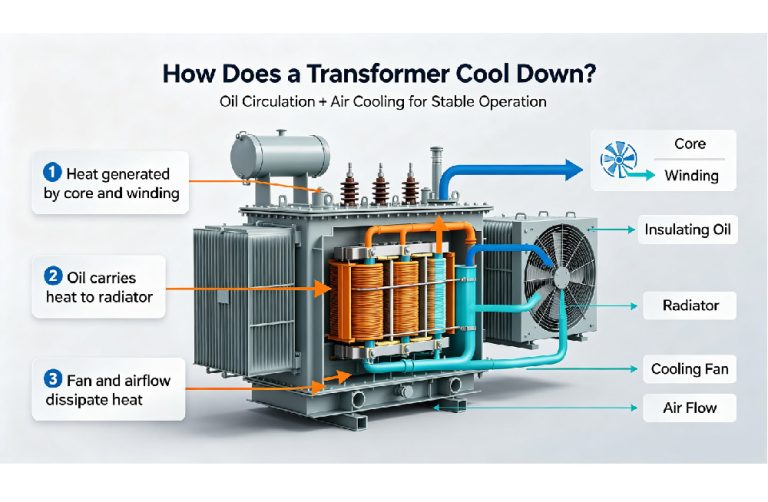
How Does A Transformer Cool Down?

Transformers are common and critical components in power systems, used to regulate voltage levels and facilitate the transmission and distribution of electrical energy. During operation, transformers generate a certain amount of heat; therefore, effective cooling measures are necessary to ensure their proper operation and extend their service life. This article will introduce common transformer cooling…

Why Does Silicon Steel Reduce Transformer Core Losses

Why Does Silicon Steel Reduce Transformer Core Losses

Why Does Silicon Steel Reduce Transformer Core Losses? I. Transformer core losses consist of two main components. The losses generated by an alternating magnetic field acting on the interior of the core are collectively referred to as “core losses”, which are divided into:Hysteresis LossThis is the energy consumed by the friction between magnetic domains within…

Which steel used for transformer core?

Which steel used for transformer core?

Transformer core: the core is the primary magnetic path component of a transformer. It is typically constructed by stacking hot-rolled or cold-rolled silicon steel sheets with a high silicon content, which are coated with insulating varnish on their surfaces. The core and the coils wound around it form a complete electromagnetic induction system, which is…

End of content

End of content