
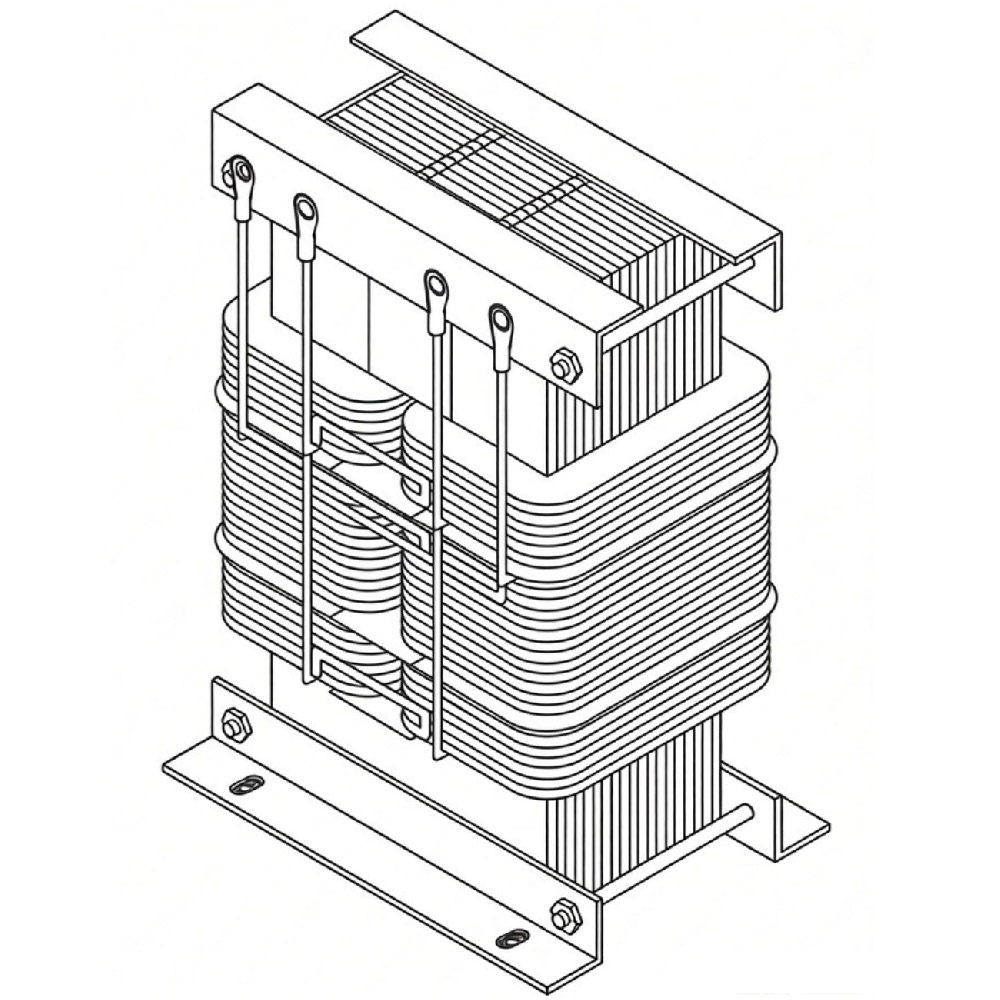
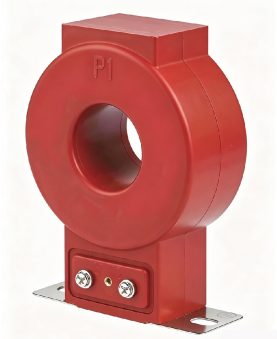
Transformer core: the core is the primary magnetic path component of a transformer. It is typically constructed by stacking hot-rolled or cold-rolled silicon steel sheets with a high silicon content, which are coated with insulating varnish on their surfaces. The core and the coils wound around it form a complete electromagnetic induction system, which is essential for the efficient transmission of energy based on the principle of electromagnetic induction. Transformer cores play a role in various fields, including power transmission and distribution networks, household appliances, and industrial equipment. The energy losses that occur within them are referred to as iron losses, which include hysteresis losses and eddy current losses. Depending on their application and structure, transformer cores can be classified into types such as strip cores, perforated cores, and wound cores; based on their shape, they can be categorized as toroidal cores, EE cores, and EI cores. The power transmission capacity of a power transformer depends on the core material and its cross-sectional area.
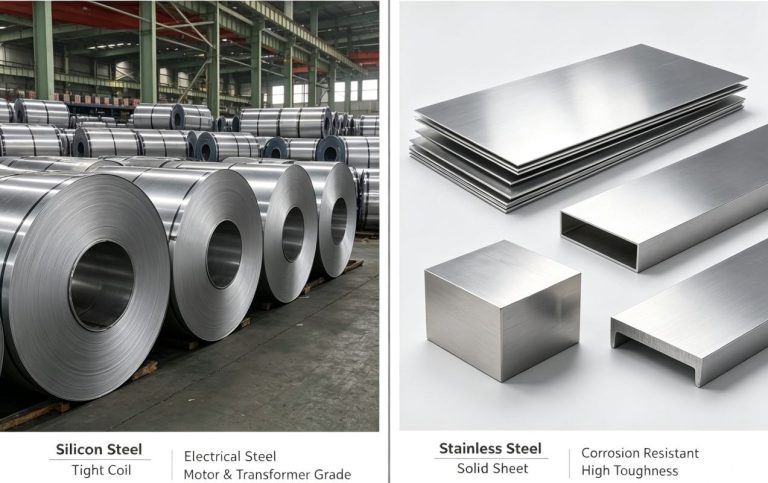
As the core component of a transformer, the material used for the core plays a critical role in its performance and cost. Grain-oriented silicon steel is the most widely used core material in both power transformers and electronic transformers. In terms of innovative design, researchers have proposed a design method for composite core structures combining amorphous alloy and grain-oriented silicon steel to combine the advantages of low loss in amorphous alloy with low vibration in grain-oriented silicon steel. What materials are used for transformer cores? Depending on whether they are high-frequency or low-frequency, there are two main categories:
- High-frequency: Ferrite core (Ferritecore)
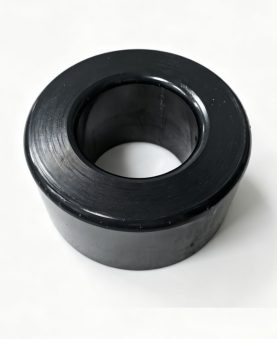
Ferrite core is used in high-frequency transformers. It is a ceramic material with a spinel crystal structure, where the spinel consists of iron oxide and other divalent metal compounds, such as KFe₂O₄ (where K represents other metals). Currently, commonly used metals include manganese (Mn), zinc (Zn), nickel (Ni), magnesium (Mg), and copper (Cu).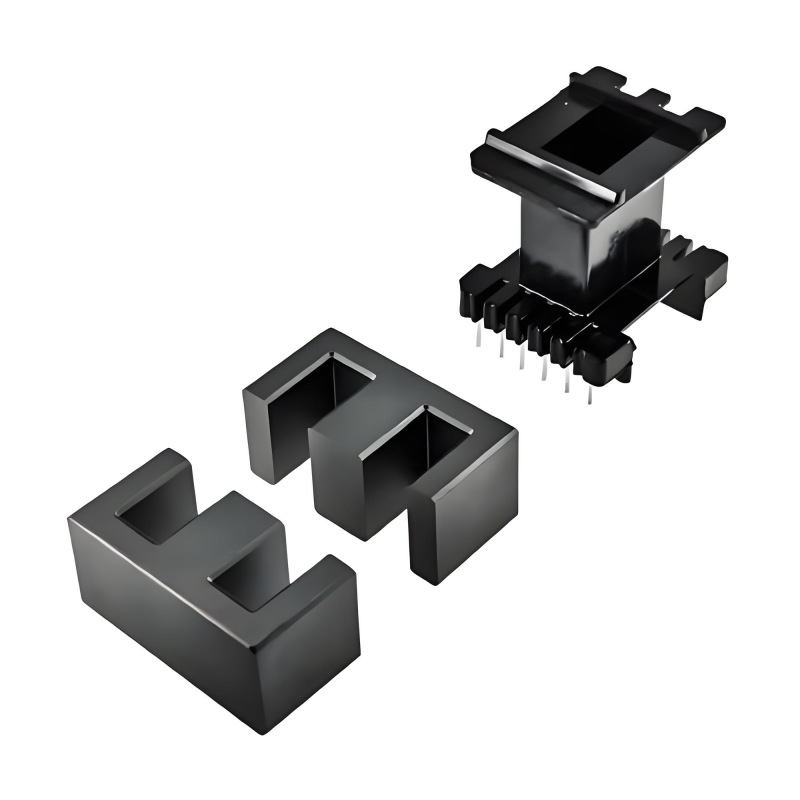 Common combinations include the manganese-zinc (MnZn) series, nickel-zinc (NiZn) series, and magnesium-zinc (MgZn) series. This material possesses high magnetic permeability and impedance, with an operating frequency range from 1 kHz to over 200 kHz.
 - Low-Frequency Category: Silicon Steel Laminations
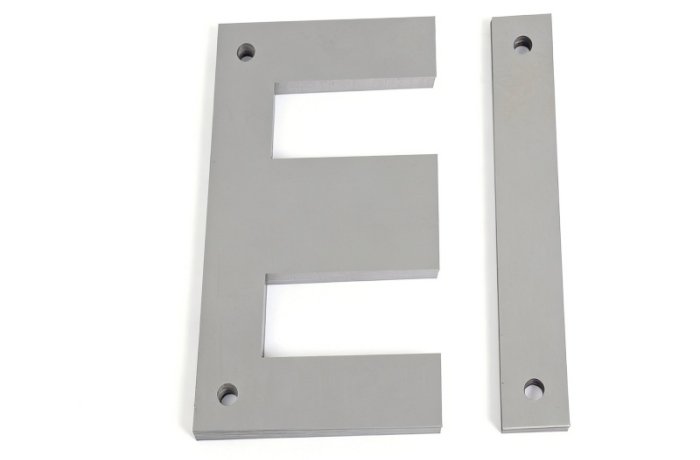
Silicon steel laminations are used in low-frequency transformers. There are many types, which can be classified into two categories based on manufacturing process: A (annealed, or “black”) and N (unannealed, or “white”). Based on shape, they can be classified as EI-type, UI-type, C-type, and U-type.
U-shaped silicon steel laminations are commonly used in high-power transformers. They offer good insulation properties, facilitate heat dissipation, and feature a short magnetic path. They are primarily used in transformers with power ratings greater than 500–1,000 W and in high-power transformers. A set of silicon steel laminations consisting of two C-shaped laminations is referred to as a CD-shaped lamination. Power transformers made with CD-shaped laminations have a higher air gap under the same cross-sectional area.
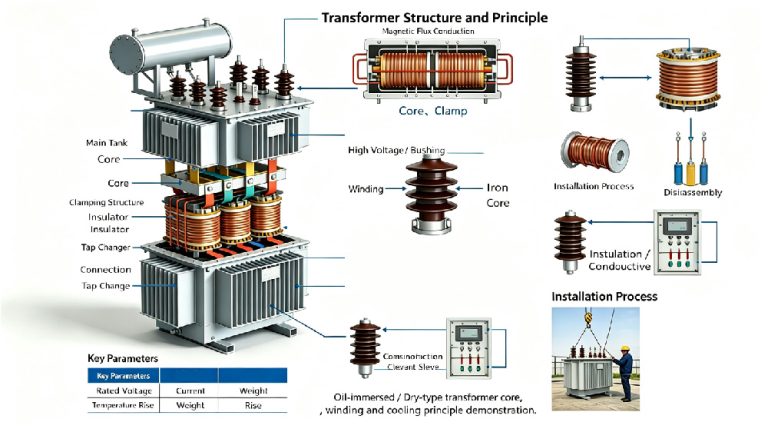
The transformer core is one of the main components of a transformer. Made of magnetic material, it effectively transmits magnetic flux and is essential for the efficient transfer of energy based on the principle of electromagnetic induction. The core serves to smooth the flow of this magnetic flux. Due to its high magnetic permeability, it is designed to transmit magnetic flux without leakage and to minimize power loss.
Energy loss, known as “iron loss,” occurs within the transformer core. Iron loss consists of hysteresis loss and eddy current loss. To reduce these losses, the core is laminated with thin magnetic steel sheets to suppress the generation of eddy currents.
What type of steel is used for transformer cores? Amorphous alloys and grain-oriented silicon steel are the two most commonly used soft magnetic materials for manufacturing distribution transformer cores. Amorphous alloys offer the advantage of low loss density but suffer from low saturation flux density and a high magnetostrictive coefficient; grain-oriented silicon steel, on the other hand, offers high saturation flux density and a low magnetostrictive coefficient but has a relatively high loss density.



Checkout our new blog post