
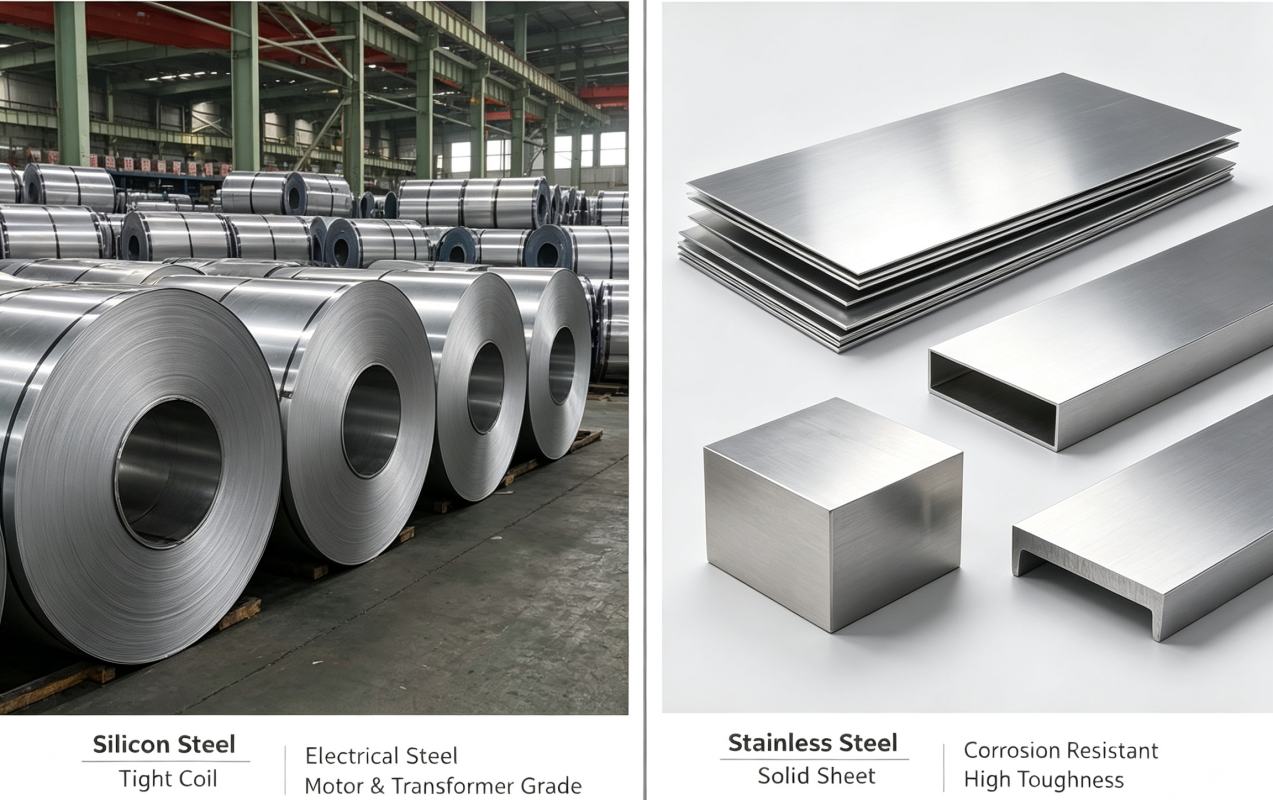
The Difference Between Stainless Steel and Silicon Steel
I. Fundamental Differences in Composition Design
Stainless steel and silicon steel are like brothers with vastly different personalities in the world of metals; their formulation approaches are completely different:
Stainless steel is primarily a chromium-nickel alloy (typically containing 10–20% chromium), like rust-proof armor for iron.
Silicon steel is an iron-silicon alloy (containing 1–4.5% silicon), with silicon acting as the conductor of the magnetic circuit.
Key difference: Stainless steel prioritizes corrosion resistance, while silicon steel focuses on optimizing electromagnetic performance.
II. Polar Opposites in Performance
When put to work, these two materials seem to come from different planets:
Electrical and Magnetic Conductivity: Silicon steel has a magnetic permeability more than 200 times that of stainless steel, but its electrical conductivity is actually lower.Temperature Resistance: Stainless steel retains its strength even at 800°C, while silicon steel’s performance begins to plummet once it exceeds 600°C.
Machining: Stainless steel requires specialized cutting tools, whereas silicon steel exhibits “magnetostriction” during stamping.
III. Differences in Application Scenarios
Their areas of expertise are like that of a forward and a goalkeeper on a soccer field:
Stainless Steel’s Home Turf: Corrosive environments such as chemical pipelines, medical devices, and food processing equipment. Silicon Steel’s Playing Field: Core components of electromagnetic equipment, such as transformer cores and motor stators and rotors
An Interesting Intersection: Certain specialized motors require the use of both—silicon steel for the magnetic circuit and stainless steel for the housing
Differences Between Silicon Steel and Stainless Steel
Silicon steel and stainless steel are two metallic materials widely used in both industry and daily life, and there are numerous differences between them.
In terms of performance, silicon steel possesses excellent electromagnetic properties. It acts like a reliable assistant: in electrical equipment such as motors and transformers, it efficiently conducts magnetic flux, reduces hysteresis losses, and significantly improves electrical energy conversion efficiency. Stainless steel, on the other hand, is renowned for its outstanding corrosion resistance. Imagine stainless steel as a warrior clad in armor—it can withstand corrosion in various harsh environments, such as damp or acidic/alkaline conditions, protecting itself from damage.
In terms of appearance, silicon steel typically has a grayish-white surface and looks rather plain. Stainless steel, on the other hand, has a bright metallic luster, resembling a mirror that reflects its surroundings, giving it an elegant and attractive appearance.
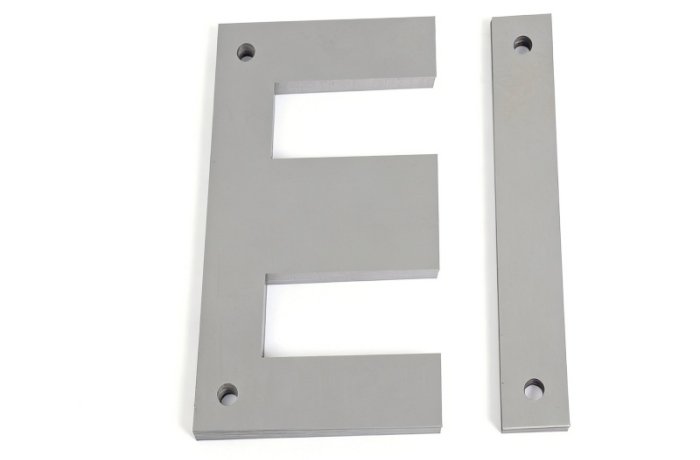
In terms of applications, silicon steel is primarily used to manufacture electrical equipment such as motor and transformer cores. For example, in transformers at large power plants, if silicon steel were not used, energy losses during the conversion process would be enormous—much like a leaky bucket where water constantly seeps out, causing significant waste. Stainless steel has a very wide range of applications, from kitchen utensils to building facades and chemical processing equipment. Take the stainless steel pots we use daily, for instance: even when exposed to the acidic and alkaline corrosion from various foods during cooking, they still maintain excellent performance and do not rust.
The advantage of silicon steel lies in its excellent electromagnetic properties, making it indispensable in the electrical field. However, care must be taken to avoid mechanical damage during use, as damage to the core may impair its electromagnetic performance. The advantage of stainless steel is its strong corrosion resistance, but it is relatively difficult to process and comes with higher costs.
Silicon steel and stainless steel are two materials with distinct characteristics, each playing an irreplaceable role in their respective fields; the differences between them determine their varying scopes of application and value.
Silicon steel is primarily used in the power and electronics industries, such as in the rotor and stator cores of electric motors. If we compare an electric motor to a human heart, then silicon steel is the key component within that heart that efficiently transmits power. Stainless steel is widely used in architectural decoration, such as the curtain walls of tall buildings. If ordinary steel were used, it would quickly become rusty and pitted due to exposure to wind and rain, whereas stainless steel acts as a guardian that never fades, preserving the building’s aesthetic appeal for the long term.
The advantage of silicon steel lies in its highly efficient electromagnetic conversion capability; however, during storage and transportation, it must be protected from moisture and rust to prevent performance degradation. The advantage of stainless steel is its ability to withstand a variety of harsh environments, but care must be taken to avoid prolonged contact with chlorine-containing substances, which can damage the protective layer on its surface.
Silicon steel and stainless steel each have their own strengths; based on their unique properties, they excel in different fields, becoming indispensable materials in modern industry and daily life.








You would want to ensure the plugin is installed and activated for the section to be visible.