Transformer Core Supplier Capability: How Supply Stability and Process Control Affect Performance and Delivery
If you’ve ever had a transformer (or magnetic component) that was fine in the lab but noisy, hot, or inconsistent in production, you’ve already seen the real story behind “supplier capability.” It’s rarely one single design mistake. More often, it’s variation — in material, in processing, and in how the supplier controls both.
If you’ve ever had a transformer (or magnetic component) that was fine in the lab but noisy, hot, or inconsistent in production, you’ve already seen the real story behind “supplier capability.” It’s rarely one single design mistake. More often, it’s variation — in material, in processing, and in how the supplier controls both.
For buyers, this matters in two places that hurt the most:
- Performance: core loss, temperature rise, audible noise, and unit-to-unit consistency.
- Delivery: lead time predictability, rework risk, and line-down surprises.
This article breaks down the two capability drivers that sit underneath both outcomes — supply stability and process control — and gives you a practical framework for evaluating suppliers.
Why “supplier capability” shows up as loss, noise, and missed dates
Transformer and magnetic cores aren’t forgiving components. You’re dealing with materials whose magnetic properties can shift with:
- small changes in thickness and coating,
- residual stress from cutting or forming,
- annealing consistency,
- stacking alignment,
- and even how parts are handled and packed.
A supplier can meet a headline spec on paper and still deliver a lot-to-lot spread that forces engineering rework, extra testing, or conservative derating.
Key Takeaway: Capability is less about one perfect sample and more about what happens on the 500th core, from the 5th material lot, shipped to a different factory.
The two hidden variables: supply stability and process control
To keep this grounded, here’s the buyer’s definition of transformer core supplier capability: the ability to deliver consistent magnetic performance and reliable lead times, repeatedly, under real production conditions.
1) Supply stability
Supply stability means the supplier can repeatedly deliver the same input conditions over time — not just “we can ship something.” In practice, it’s consistency in:
- material grade and source,
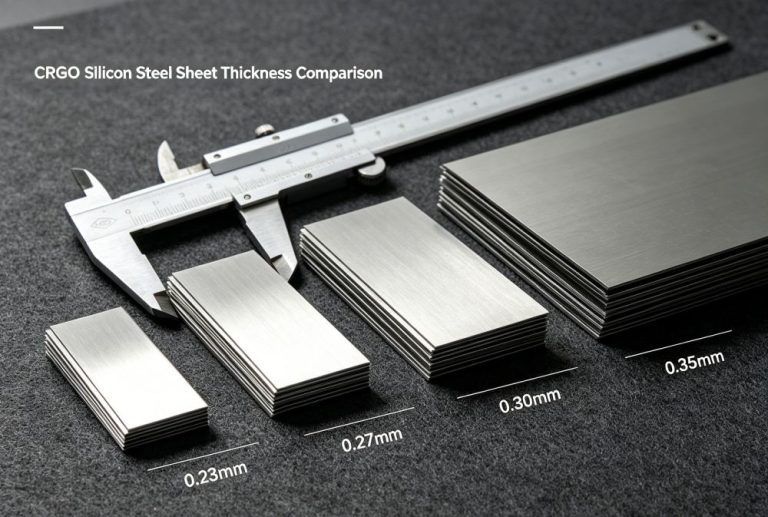
- thickness and coating,
- annealing condition,
- tooling condition and process windows,
- and the supplier’s ability to stay on schedule when demand spikes.
2) Process control
Process control is how tightly the supplier can keep the manufacturing process inside an approved window — and prove it.
In manufacturing terms, you’re looking for repeatable control of:
- incoming material inspection,
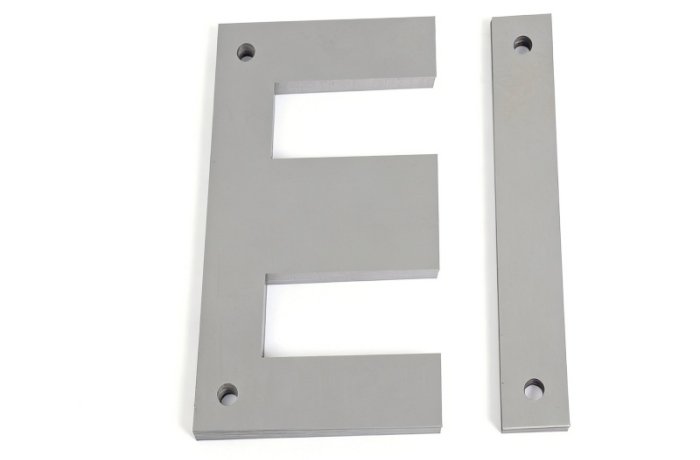
- cutting/stamping quality (burr control, edge damage, dimensional drift),
- stacking/winding/clamping consistency,
- in-process inspection,
- and final test methods that match the application.
A supplier can be stable but poorly controlled (consistent mistakes), or well controlled but unstable upstream (great process, unpredictable materials). The best suppliers are both.
How process control changes core performance
At a high level, poor process control tends to show up as one of three symptoms:
- Higher-than-expected core loss → more heat.
- Higher noise (or inconsistent noise) → especially painful in installations where acoustics matter.
- Wider performance spread → “meets spec” on average but fails too often at the edges.
Core loss: it’s not just the steel grade
Core loss is a function of material properties and how the material is processed and assembled. That’s one reason magnetic-property measurement standards exist — they define test methods so results can be compared.
For electrical steel strip and sheet, the IEC defines single-sheet measurement methods in IEC 60404-3:2022 (single sheet tester method). For power-frequency properties using an Epstein frame, the ASTM defines the method in ASTM A343/A343M (25 cm Epstein frame test method).
That’s the measurement side. The manufacturing side includes the effects of burrs, edge damage, stacking gaps, and stress — all of which can increase loss and temperature rise.
A concrete example of what buyers should care about: in transformer core manufacturing, cutting and stacking quality influence magnetic continuity and eddy-current paths. Shumyip summarizes several of these factory-level controls in its explainer on transformer core process control.
Noise: magnetics meets mechanics
Transformer noise isn’t just an electrical issue. Magnetostriction and mechanical vibration can turn small variations into audible complaints.
The practical supplier angle:
- Cutting stress and poor joint assembly can increase vibration.
- Inconsistent stacking pressure or misalignment can create variability that’s difficult to debug downstream.
If you’re buying for noise-sensitive installations (building equipment, medical, instrumentation), consistency is often more valuable than a single “best-case” number.
Consistency: the buyer metric most teams forget to request
A supplier can “meet spec” with a wide distribution — and that distribution becomes your scrap, rework, and extra incoming inspection.
Process-controlled suppliers typically can show:
- tighter dimensional capability,
- lot traceability,
- clearer change control,
- and stable test methods over time.
Why magnetic performance data isn’t always comparable
One of the fastest ways buyers get misled is by comparing numbers that look identical but were measured differently.
Here are common reasons supplier test data can’t be compared directly:
- Different test method (single-sheet tester vs Epstein frame).
- Different conditions (50 Hz vs 60 Hz; different flux density points).
- Different specimen form (raw strip test vs finished lamination/core).
- Different sample preparation (shearing, punching, deburring — all add stress).
- Different orientation (especially critical for grain-oriented steels).
How to fix it (without turning procurement into a research project)
You don’t need to become a standards expert. You just need to make sure everyone is playing the same game:
- Specify the property and the method together.
- Specify frequency and flux density points.
- Specify specimen form (strip/sheet vs finished core) and orientation.
- Require that suppliers state the standard revision and test conditions.
If your application uses non-sinusoidal excitation (e.g., high-frequency magnetics, PWM waveforms), treat “pretty datasheet numbers” with caution — test methods and conditions need to match reality.
What supply stability really means (and why it changes delivery)
When buyers say “we need stable supply,” they usually mean “don’t miss dates.” But supply stability also protects performance.
A stable supplier reduces the frequency of:
- unplanned material substitutions,
- production line interruptions,
- re-qualification events,
- and engineering churn caused by drift.
From a delivery standpoint, stability isn’t a promise — it’s an operational capability. Signs include:
- consistent raw material sourcing (with traceability),
- controlled inventory policies,
- realistic lead times (with track record),
- and a documented approach to managing changes.
This is one reason quality-system maturity matters. ISO 9001 is not a “perfect quality” badge, but it is a signal that the supplier runs a documented management system for process consistency, corrective action, and continual improvement — see ISO’s ISO 9001 overview.
For buyer context, Shumyip also describes its quality assurance and ISO 9001 practices as part of its manufacturing process.
A practical transformer core supplier evaluation checklist
Use this as a starting point for supplier calls, audits, or RFQs.
What to ask (capability questions)
- “How do you control and document material grade, thickness, and coating across lots?”
- “What is your change-control process if a raw material source changes?”
- “Where do you measure loss, noise, and dimensional accuracy — and how often?”
- “Can you provide lot traceability from raw material to finished core?”
What to request (evidence)
- A sample test report with conditions clearly stated (frequency, flux density, method).
- A brief description of the measurement method (Epstein/SST/finished-core test).
- A dimensional inspection report (critical dimensions + tolerances).
- Any ISO 9001 certificate and audit scope (what site, what activities).
Red flags
- “We can’t share test conditions — just trust the number.”
- Loss data reported without method, frequency, or flux density.
- Inability to explain how burr control, tooling wear, or stacking alignment are monitored.
- Unrealistically short lead times with vague capacity explanations.
⚠️ Warning: The cheapest core is often the most expensive after you pay for extra incoming inspection, rework, and schedule slips.
A simple weighted scorecard you can use
If you need a quick way to align engineering and procurement, start with a 100-point model:
- Technical performance (50 points)
- loss at operating point
- temperature rise margin
- noise performance (if relevant)
- consistency (lot-to-lot spread)
- Process control & quality system (25 points)
- traceability
- defined test methods and reporting
- change control
- ISO 9001 scope and maturity
- Supply stability & delivery confidence (25 points)
- lead time track record
- capacity headroom
- upstream sourcing strategy
- packaging and handling controls
The point isn’t mathematical precision. It’s making sure you don’t “buy on price” while ignoring the two variables that decide whether your project ships on time.
Next steps
If you’re early in supplier evaluation, two actions give you the fastest signal:
- Ask for a sample test report with test conditions and confirm it’s comparable.
- Ask how they manage material and process changes (and whether it’s documented).
If you’d like deeper context on material choice, Shumyip’s guide on electrical steel material selection is a useful starting point.
And if you want to sanity-check a supplier’s factory claims, start with process basics like stacking accuracy, cutting quality, and joint design — a practical walkthrough is in this laminated core factory performance guide.
Soft CTA (optional): If you’re sourcing transformer or magnetic cores and want a fast feasibility check, you can explore Shumyip’s capabilities and request an initial quote or sample through the website.