Transformer core clamp we usually mention actually refers to two separate parts: the transformer core and the core clamp. Below is an easy-to-understand overview for beginners, not strictly precise, just for a general idea.
1. What is a transformer core?
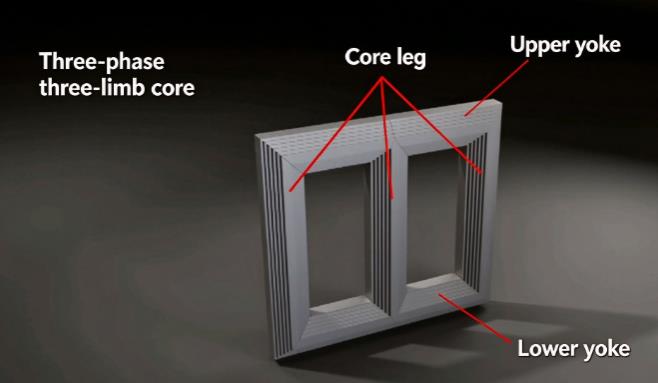
The transformer core acts as the magnetic path for the magnetic field generated by the windings.
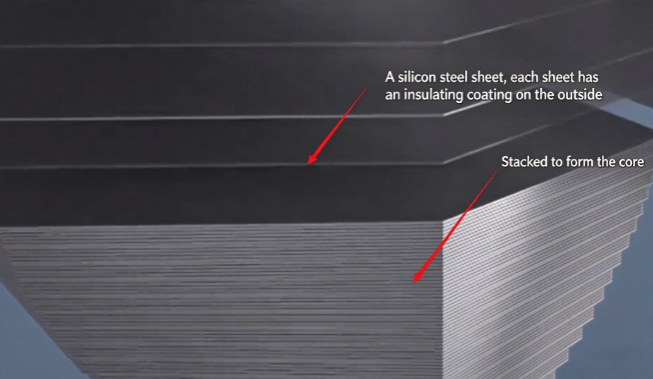
It is stacked up from a large number of silicon steel sheets instead of being a solid steel block. Coils of different voltage classes of the transformer are wound around the outside of the core.
2. What is a transformer core clamp?
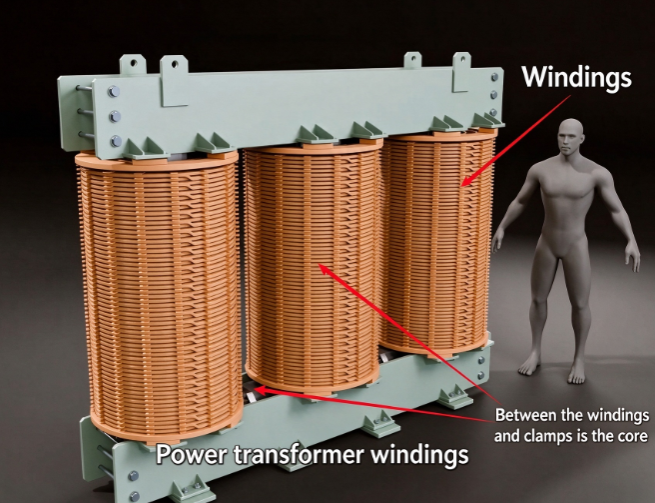
Simply put, the core clamp holds the core and windings tightly in place. It keeps them stable and prevents loosening or deformation caused by vibration during transformer operation.
3. Why do the core and core clamp need earthing? And why is single-point earthing required for both?
The core and core clamp sit inside the strong alternating electric field created by current in the windings. Uneven electric fields build up floating potential on the core and clamps. If the floating potential becomes high enough, it can cause electric discharge toward the transformer tank or other components. By connecting the core to ground, its potential stays equal to ground potential and this discharge risk is eliminated.
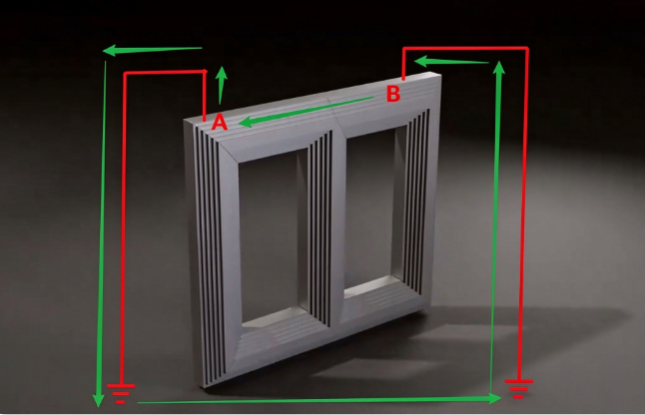
But why only one grounding point? Would multiple grounding points be more reliable? If the core is grounded at two points, voltage difference may exist between point A and point B due to uneven electric distribution. For example, 10 V at point A and 20 V at point B. This potential difference creates circulating current flowing between A and B. The circulating current generates heat inside the core and may damage it. That is why only single-point earthing is allowed and multi-point earthing is forbidden. The same rule applies to core clamps.
4. How are transformer core and core clamp earthed?
(Diagram reference)
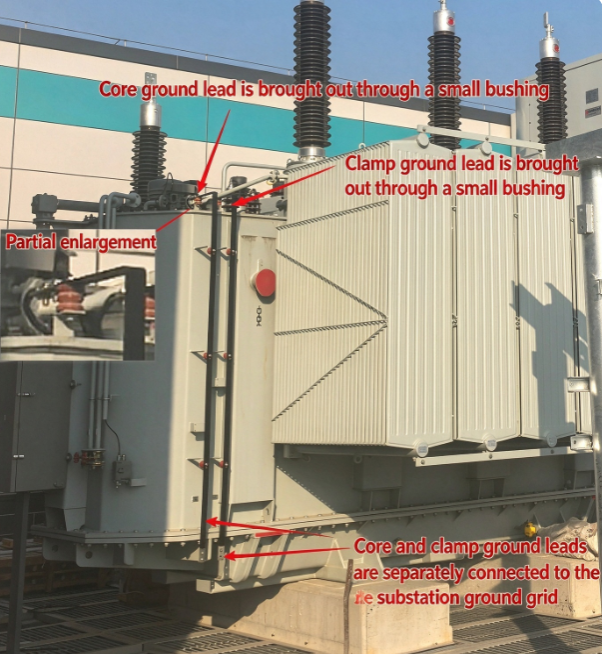
5. Why and how do we monitor the earth current of core and core clamp?
When a transformer core or clamp has two or more earthing points, circulating current will form inside. It leads to local overheating. In severe cases, it burns the core or clamp, or even melts the grounding strap. This leaves the core and clamp at floating potential and triggers discharge faults, which greatly endanger safe transformer operation. Therefore, real-time monitoring of core and clamp earth current is critical during operation.
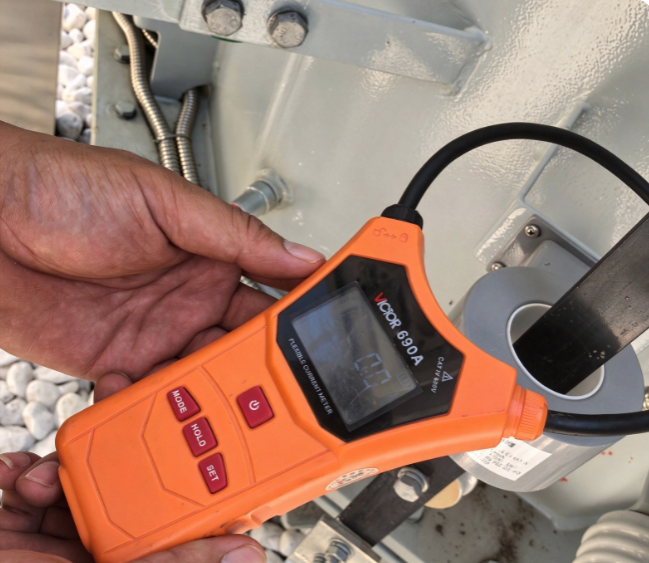
The traditional method uses a handheld clamp meter to measure the earth current. This method has obvious drawbacks: low accuracy, susceptible to power frequency magnetic interference, and no continuous online monitoring. Nowadays, online earth current monitoring sensors are installed on the grounding leads of the core and clamps. Collected data is transmitted to the monitoring system in real time.