
Description
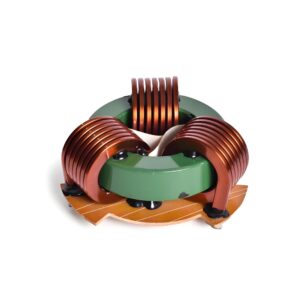
Isolation transformers for telecommunications equipment serve as core power protection components for communication base stations, equipment rooms, and network transmission equipment. They primarily isolate high- and low-voltage circuits through electrical isolation, filter power grid noise, and suppress surge currents to ensure a clean power supply and stable operation of telecommunications equipment. Compared to standard power transformers, telecommunications-grade isolation transformers are subject to extremely high requirements for interference resistance, voltage regulation accuracy, and long-term reliability. The widespread adoption of amorphous cores has become the key to enhancing their performance.
This device features core capabilities including electrical isolation, electromagnetic shielding, noise reduction and voltage stabilization, and safety protection. It completely severs the electrical connection between the input and output terminals, effectively preventing leakage currents and high-voltage pulses from causing breakdown and damage to precision communication modules, while significantly reducing grid harmonics and electromagnetic interference. The device offers excellent insulation performance and strong resistance to surges and lightning strikes, making it suitable for long-term, uninterrupted operation in data centers. Its compact size and low heat generation perfectly align with the miniaturization and high-integration requirements of telecommunications equipment.
In terms of performance, isolation transformers equipped with amorphous cores offer significant advantages. Amorphous materials feature extremely low hysteresis and eddy current losses. Compared to traditional silicon steel cores, no-load losses are reduced by over 70%, operating temperature rise is significantly lowered, and energy efficiency is markedly improved. Additionally, with high magnetic permeability and excellent magnetic shielding performance, they deliver precise and stable output voltage, eliminating issues such as network disconnections, signal abnormalities, and equipment crashes caused by power fluctuations, thereby ensuring the continuous and stable operation of communication systems 24 hours a day.
Their applications span the entire telecommunications sector, with widespread use in 5G/4G communication base stations, data center servers, fiber-optic transmission equipment, industrial communication gateways, and satellite communication equipment. They serve not only as core components for stable voltage supply in communication equipment but also as critical devices for electromagnetic compatibility (EMC) protection in low-voltage systems, providing essential safeguards for the stable operation of modern communication networks.
Equipment use and maintenance must adhere to standardized specifications. Installation should be in a well-ventilated and dry environment to prevent dust accumulation and moisture buildup, which can degrade insulation performance. Prolonged overloading is strictly prohibited to prevent magnetic performance degradation of the amorphous core. Keep the device away from equipment emitting strong electromagnetic radiation to avoid magnetic field interference that could affect isolation and voltage stabilization. Regularly inspect the wiring and core condition, and promptly remove accumulated dust to maintain stable operating conditions.
With the large-scale deployment of 5G, the rapid development of the Industrial Internet and the smart communications industry, and the continuous iteration and upgrading of global communications infrastructure, market demand for highly stable, low-loss isolation transformers continues to rise. Traditional silicon steel transformers are no longer suitable for high-frequency, long-duration, and low-noise communication applications. Amorphous cores, with their exceptional energy-saving and anti-interference capabilities, are gradually replacing them across the board. In the future, communication isolation transformers will evolve toward miniaturization, higher frequencies, and higher protection ratings, while the penetration rate of amorphous core-based products continues to rise, indicating a promising future for the industry.



Reviews
There are no reviews yet.